
GTA San Andreas Highly Compressed Apk Obb (GTA SA)
Remember the feeling? The bass-heavy thrum of a lowrider, the vast, sun-baked sprawl of a fictional California, and the weight of the world resting squarely on the shoulders of one man trying to come home. If you were a gamer between the ages of 16 and 35, chances are, Grand Theft Auto: San Andreas wasn’t just a game—it was an era.
Released by Rockstar Games in 2004, Grand Theft Auto: San Andreas didn’t just push the boundaries of the open-world genre; it shattered them entirely, creating a sandbox so rich and detailed that, even two decades later, few titles have truly matched its scope and ambition. It took the groundwork laid by Grand Theft Auto III and Vice City and escalated everything, giving us a main character, Carl “CJ” Johnson, who was more relatable and complex than any protagonist the series had seen before.
This isn’t just a game; it’s a cultural touchstone. It’s where we learned to eat, work out, fly planes, and control the destiny of a virtual icon. But what makes Grand Theft Auto: San Andreas endure? How did it manage to create an experience that still feels fresh when countless open-world games have followed? Let’s take a nostalgic, deep dive into the streets, the cities, and the mechanics that cemented this title as one of the greatest of all time.
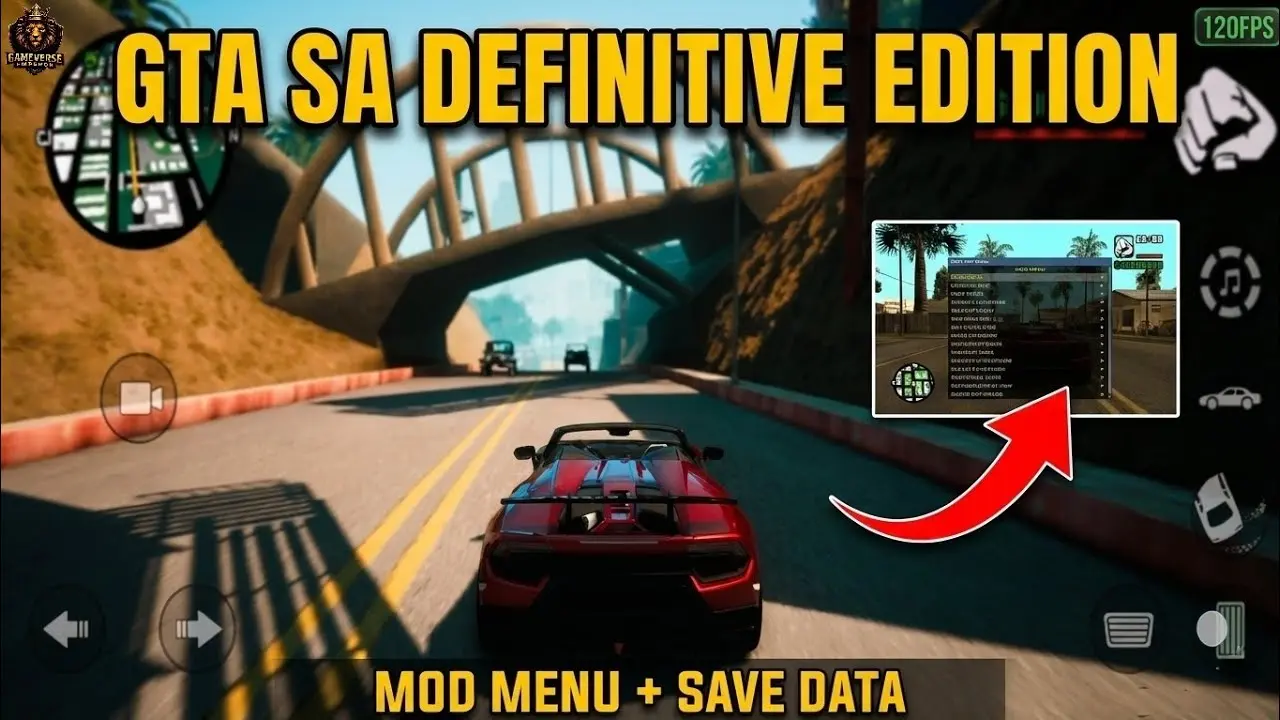
The Story: Loyalty, Betrayal, and the Return of CJ
The heart of any great Grand Theft Auto title is its narrative, and the story of San Andreas is a masterpiece of early 2000s crime drama, taking heavy inspiration from 90s West Coast gang culture and cinema.
The Protagonist: Carl “CJ” Johnson
Unlike the silent Claude in GTA III or the verbose, power-hungry Tommy Vercetti in Vice City, Carl Johnson, or CJ, is human. He’s complex, reluctant, and driven primarily by family and loyalty, not just greed. The game kicks off with one of the most iconic opening sequences in history: CJ returns to Los Santos after five years in Liberty City following the death of his mother.
“Ah sh*t, here we go again.” That line, uttered as he steps off the plane, perfectly sets the tone. CJ isn’t looking to be a kingpin; he’s looking to mend fences with his brother Sweet, his sister Kendl, and his homies Big Smoke and Ryder, and pull the fractured Grove Street Families back together.
The Conflict: Grove Street vs. The World
The initial narrative focus is grassroots—reclaiming territory from the rival Ballas gang. This early focus grounds the player in the gritty reality of Los Santos. However, the true tension of the story emerges from the devastating betrayal that sends CJ spiraling out of the city and into the wider state of San Andreas.
The reveal that Big Smoke and Ryder—the people CJ risked everything for—were working with the corrupt C.R.A.S.H. unit, led by the unforgettable Officer Frank Tenpenny (voiced brilliantly by Samuel L. Jackson), is one of the most shocking moments in gaming history. This betrayal shifts the story’s scope from petty gang warfare to a massive tale of corruption, revenge, and survival.
A Journey of Transformation
As CJ is forced into exile by Tenpenny, the player embarks on an incredible journey across the state, involving:
- San Fierro: Getting involved with counter-culture, triads, and high-stakes operations in a city modeled after San Francisco.
- The Countryside: Engaging in back-country pursuits, from farm raids to mysterious government-adjacent projects.
- Las Venturas: Becoming an essential figure in the casino business, infiltrating high-roller establishments, and pulling off the ultimate heist—a classic Grand Theft Auto climax.
The narrative arc of CJ, from a corner gangster to a master criminal, pilot, and successful entrepreneur, is what gives Grand Theft Auto: San Andreas its unparalleled sense of progression and scale. It’s a story about a man who leaves his past behind, embraces his destiny, and then ultimately chooses to return to his roots to settle the score.
The World: Exploring the Vast State of San Andreas
The title of the game isn’t Grand Theft Auto: Los Santos, and for good reason. For the first time in the series, Rockstar gave us not one, but three full-scale, unique cities, interconnected by sprawling countrysides, deserts, and mountains. This massive, contiguous map is arguably the game’s greatest technical achievement and a crucial part of the magic of San Andreas.
Los Santos: The Concrete Jungle
Los Santos (based on Los Angeles) is where the journey begins. It’s a city defined by its dual nature: the decaying, gang-ridden ghettos of the East Side, and the opulent, sun-drenched hills and beachfronts of Vinewood and Santa Maria Beach.
- Key Feature: The early Grand Theft Auto experience here is defined by gang wars. The ability to recruit Grove Street members and actively fight for turf was a revolutionary mechanic that gave a purpose to the map beyond missions.
- Atmosphere: Gritty, immediate, and nostalgic. The feeling of flying high above the city and spotting Grove Street one last time is a powerful emotional beat.
San Fierro: Hills and High Stakes
Once CJ makes it to San Fierro (a nod to San Francisco), the atmosphere changes entirely. The city is smaller, denser, and characterized by steep hills, winding roads, and a more diverse criminal ecosystem involving triads, drug dealers, and car thieves.
- Key Feature: This city introduces advanced vehicle mechanics, including driving schools and the ability to customize cars at the TransFender garages. San Fierro is where CJ becomes a sophisticated operator.
- Atmosphere: Foggy, vibrant, and focused on technical operations and complex schemes.
Las Venturas: The Neon Dream
Las Venturas (Rockstar’s version of Las Vegas) is the dramatic climax of the map. It’s a surreal, neon-drenched desert paradise of risk, opportunity, and excess.
- Key Feature: Casinos! The introduction of gambling, high-roller missions, and the preparation for the biggest heist in the game. It also features vast, empty desert regions perfect for aerial exploration and off-road mayhem.
- Atmosphere: Flashy, dangerous, and the ultimate playground for CJ’s newly acquired wealth and skills.
The simple fact that you could travel seamlessly from the streets of Los Santos to the wilderness, and then onward to the bright lights of Las Venturas, without a single loading screen (once the cities were unlocked) was breathtaking and truly set a new benchmark for open-world design, securing Grand Theft Auto its place as a genre innovator.
The RPG Revolution: More Than Just Driving and Shooting
This is where Grand Theft Auto: San Andreas fundamentally changed the series and the genre. It wasn’t enough to just drive fast and shoot straight; CJ’s abilities were tied directly to the player’s actions. This injection of role-playing mechanics gave the game an unbelievable depth and longevity, making the player truly feel responsible for the character’s growth.
Physical Attributes: Shaping CJ
In prior Grand Theft Auto titles, the character model was static. In San Andreas, CJ was a malleable canvas.
- Eating and Exercise: If CJ ate too much fast food (Cluckin’ Bell, Pizza Stack), he’d gain weight and become slower and less effective in combat. If he worked out at the gym, he’d gain muscle mass, increase his stamina, and improve his punching power. This was a radical concept—a main character whose physical appearance and abilities dynamically changed based on player choices.
- Dating and Relationships: CJ could date several girlfriends, each offering different perks (e.g., keeping your weapons after being busted, or access to new outfits). Maintaining these relationships involved taking them out, requiring players to pay attention to CJ’s appearance and driving skills.
- Hairstyles and Tattoos: The sheer volume of customization options, from barbershops and clothing stores to tattoo parlors, allowed players to personalize CJ to an extent previously unseen. You could dress him in high-end streetwear or keep him in the signature Grove Street green—your choice directly influenced respect levels.
Skill Progression: Become an Expert
Beyond aesthetics, every mechanical action CJ performed was tied to a skill meter:
- Driving Skill: The more you drove a specific class of vehicle (cars, bikes, planes), the better CJ became at handling them. A low-level driver spins out easily; a maxed-out driver is a precision machine.
- Weapon Skill: Firing a pistol repeatedly improved CJ’s accuracy and rate of fire. Reaching the “Hitman” level for a weapon meant dual-wielding pistols—a massive gameplay advantage and an incredibly satisfying reward for grinding.
- Lung Capacity: Necessary for underwater exploration, this skill had to be physically practiced by swimming.
These RPG elements meant that the player was constantly investing in CJ. The time spent training at the gym, practicing at the flight school, or driving across the map wasn’t just filler; it was integral to making your version of CJ the ultimate weapon. It created a true sense of personal connection to the protagonist, deepening the emotional resonance of the entire Grand Theft Auto experience.
The Sound of a State: A Defining Soundtrack
You cannot discuss Grand Theft Auto: San Andreas without mentioning its radio. The game’s soundtrack, covering everything from West Coast hip-hop and classic rock to country and new wave, is arguably the finest curated selection in video game history. It wasn’t just background noise; it was the cultural heartbeat of the 1990s setting.
Radio Los Santos (The Hype)
Hosted by Julio G, Radio Los Santos instantly plunges you into the core atmosphere. Featuring tracks from legendary artists like Dr. Dre, Snoop Dogg, and Ice Cube, it provides the essential soundtrack for cruising through the Grove Street territory or challenging a rival gang. It’s the definitive sound of the San Andreas narrative.
K-DST (The Classics)
Hosted by the legendary Axl Rose (as DJ Tommy Smith), K-DST gave us the classic rock vibes that made cross-country drives essential. Whether it was driving a muscle car through the Bone County desert or flying a plane above the clouds, songs by bands like Lynyrd Skynyrd and Foreigner provided epic scope to the player’s freedom.
K-Rose (The Comedy)
K-Rose, the country station, provided comic relief during the missions in the rural areas, while WCTR (West Coast Talk Radio) offered hilarious and cutting satire that perfectly matched the subversive, dark humor that is a hallmark of the Grand Theft Auto series.
The immersion provided by this carefully crafted audio landscape made the State of San Andreas feel like a real, living, breathing place. It’s why so many gamers immediately associate the first few notes of a specific track with the vast, open road of the game.
The Legacy: A Modding Titan and Genre Blueprint
The influence of Grand Theft Auto: San Andreas stretches far beyond its initial release. It is a game that served as a blueprint for future open-world titles and single-handedly launched an entire community of modders and multiplayer fanatics.
The Rise of Multiplayer
While not officially part of the core game, the modding community took Grand Theft Auto: San Andreas and turned it into an unofficial multiplayer phenomenon. SA-MP (San Andreas Multiplayer) and MTA (Multi Theft Auto) allowed thousands of players to interact in the massive world simultaneously. These mods established the foundation for massive open-world role-playing communities—a direct spiritual predecessor to modern community-driven servers like FiveM and the role-playing surge seen across the entire Grand Theft Auto franchise.
Influence on Open-World Design
The RPG mechanics introduced in San Andreas became standard fare. The concept of skill trees tied to specific actions (driving, shooting, stamina) is now common in action-adventure games. More importantly, the sheer verticality and variety of activities—piloting jets, performing high-level heists, managing properties, running property mini-games, and managing a character’s diet and appearance—forced other developers to raise their standards for what an open-world title should offer. The sheer density of content and player freedom made it a near-impossible act to follow.
The True Spirit of Grand Theft Auto
Ultimately, Grand Theft Auto: San Andreas captured the true, rebellious spirit of the franchise better than almost any other entry. It delivered a biting social commentary, gave players unparalleled freedom, and wrapped it all in a profoundly human story about finding your way back home. It remains a masterpiece of design, a nostalgic trip for millions, and a game that continues to influence every major release in the open-world genre today.
For those of us who spent countless hours cycling through the backroads of Red County, flying over Mount Chiliad, or fighting the final showdown on Grove Street, the memories are indelible. This isn’t just great gaming history; it’s the undisputed peak of the early 2000s sandbox experience. The world is better because Carl Johnson came home.
The State of San Andreas: What Makes it Timeless
What truly gives Grand Theft Auto: San Andreas its longevity isn’t just one mechanic, but the synergy of its systems.
For instance, consider the infamous “gym” sequence. While tedious to some, the ability to physically see the result of your grinding—CJ getting ripped, losing fat, and fighting better—made the progression tangible. The physical transformation mirrored the narrative transformation: CJ starts as an out-of-shape, small-time player, and by the end, he is the most powerful and capable individual in the state. This level of synchronization between story, mechanics, and player agency is the secret sauce.
The vehicle variety also contributed massively. From low-riders that could bounce to the beat of Radio Los Santos to military-grade tanks and Harriers, the game constantly rewarded exploration with new toys. The inclusion of aircraft and parachuting fundamentally altered how players interacted with the map, adding a necessary vertical element to the sprawling world.
No other game in the Grand Theft Auto canon offers such a comprehensive, all-in-one package of character development, exploration, and crime simulation. It is the pinnacle of the PS2 era and a strong contender for the best game in the entire series.
The Endless Adventures and Side Content
If the main storyline wasn’t enough to carry the required length, the amount of optional content in Grand Theft Auto: San Andreas is staggering and speaks to its incredible value proposition.
- Property Management: Buying businesses and properties across the state allowed CJ to generate passive income and unlock side missions. This system gave real purpose to the vast amounts of cash the player accumulated.
- Unique Jumps and Collectibles: The 50 unique stunt jumps, the horseshoes in Las Venturas, and the oysters scattered underwater provided players with hours of exploration and rewarding challenges that often required high-level flying and driving skills.
- Vigilante and Paramedic Missions: Classic Grand Theft Auto side activities were back, allowing players to feel like a state-sanctioned hero (or just a bored criminal with a siren). Completing the Paramedic missions was an arduous task that paid off with a huge health boost.
- Minigames Galore: From playing pool in a bar and arcade games to dancing contests and basketball, the minigames were seamlessly integrated and provided breaks from the main mission structure, grounding CJ in the world and adding to the overall player experience.
This richness of optional content ensures that even after the final mission is complete, players still have dozens of hours of discovery left. It’s why people can still pick up and play Grand Theft Auto: San Andreas today and find something new to do. It’s a testament to a level of detail and ambition that remains truly unmatched.
Final Verdict: Why Grand Theft Auto: San Andreas Remains Classic
In the history of gaming, few titles possess the sheer magnetic quality of Grand Theft Auto: San Andreas. It was a game that promised freedom and delivered an entire state full of possibilities. It seamlessly blended three distinct cities, injected deep RPG elements into an action game, and told a powerful, resonant story of coming home, loyalty, and redemption.
The legacy of this game is evident in every modern open-world title that emphasizes character customization, skill progression, and map variety. It is the definition of a generational classic, and whether you are 16 or 35, the name Carl Johnson and the sound of a bouncing lowrider will always bring you back to Grove Street. The magic of San Andreas is that it let you be whoever you wanted, wherever you wanted, making it the most personal and enduring entry in the entire Grand Theft Auto universe





Hshhh bhshj